The Freedom Quilting Bee Folk Art and the Civil Rights Movement
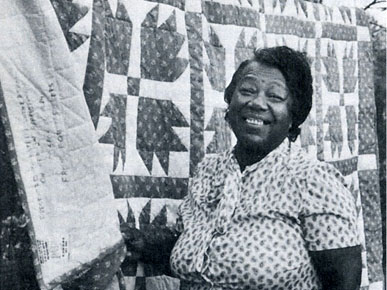 Community leader and civil rights activist Estelle Witherspoon (1916-2001) served as the first director of the Freedom Quilting Bee, and her domicile served as the initial base for the group. Photograph by Nancy Callahan
The Liberty Quilting Bee:
Textile Art and Mutual Assistance
in the Civil Rights South
Aja Bail
In Wilcox County, at the rural center of Alabama, a remarkable convergence of political, economical and artistic innovations gave rise to a new vision of self-determination and social transformation that would forever alter the lives of the communities that lived at that place.
In 1965 the national Civil RIghts motion had go focused on the Black Belt, a place named both for its rich fertile soil, and considering it was home to many African American share-croppers who lived and worked in farthermost poverty. Amidst an temper charged by racist murders and police violence which would prompt President Johnson'due south legislation protecting voting rights, the blackness community and their allies responded with counter-demonstrations and perchance about memorably, a four day march from Selma to Montgomery led by Martin Luther Rex Jr. Black residents experienced targeted economic repression by landlords, business owners and banks, finding themselves suddenly evicted or required to pay back loans or store credit in total as a direct result of their participation in these demonstrations for voting rights, as was often communicated to them directly. These events, and the increasingly dire weather condition that led to them, contributed to this region existence the focus of daily news headlines across the country over the spring and summer of that year. It is from within this crisis that an incredible group of talented black women artists came together and built a network across the country that enabled a thriving community project in Wilcox Canton, Alabama, known as the Freedom Quilting Bee (FQB).
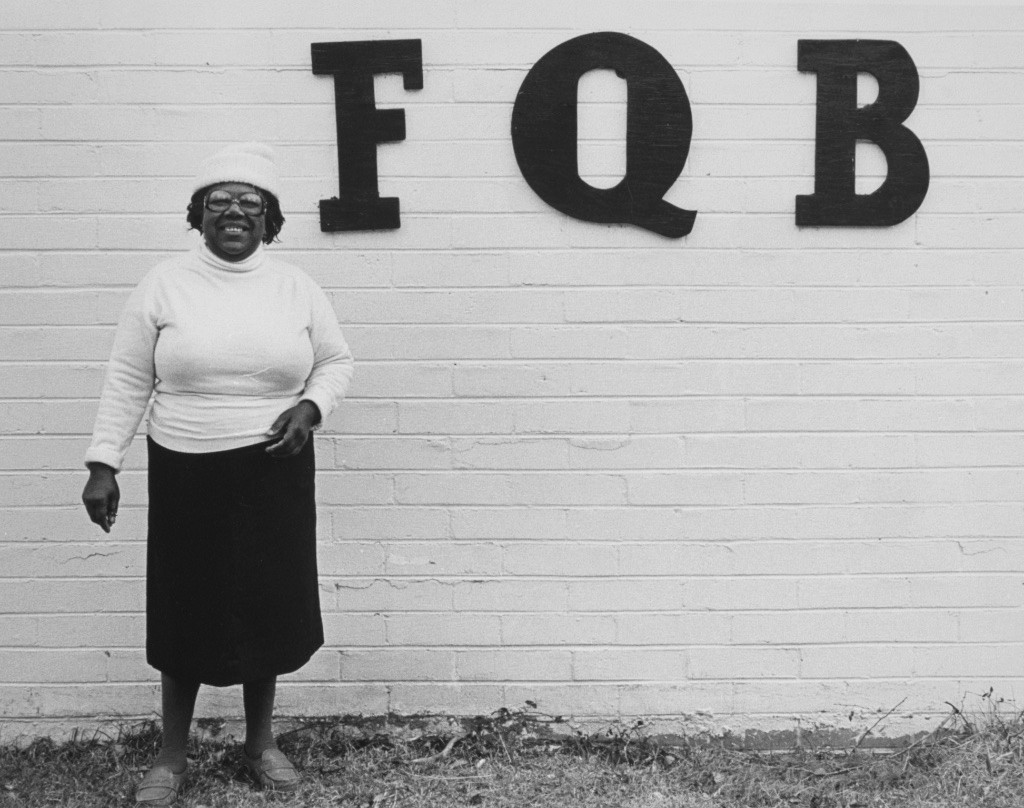
Estelle Witherspoon, 1980 Photograph by John Reese
Quilting had always been a form of creative expression, resourcefulness, care and beauty in African American communities. Quilts were made past piecing together scraps, cast-off old clothes and waste products from textile factory work, then lovingly and fastidiously paw pieced and often collectively quilted in what's known as a "Bee". Before the community had a purpose-built space, they would gather together in each other's homes to collectivize the labor of completing a quilt, which was applied and also served equally a celebration. In homes such as that of civil rights activist and future FQB leader Estelle Witherspoon, the women from this and neighboring communities created their own distinct styles and innovative interpretations of classic designs. Gee'southward Bend, a at present well-known community of visionary quilters, isolated within a large bend of the Alabama River, was a brusk machine and ferry ride from the Freedom Quilting Bee, and many of its members came from the FQB to participate in the projection. Before information technology was established, the FQB women made quilts for their families and friends, and if for some reason they were able to find buyers, they got $v for a quilt (equal to about $40 today) which would have required weeks of labor. Things would alter for these artists every bit the confluence of events and civil rights activism that was occuring in the area brought not but media attending only also newcomers showing upwards looking to be of help. This in part made it possible for new connections to be forged in the midst of so much upheaval which immune for radical new possibilities for the lives of these women and their families.
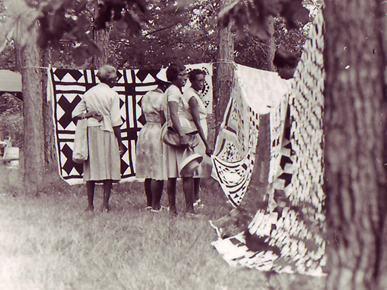
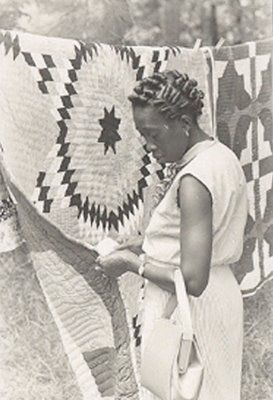
Members of the Freedom Quilting Bee brandish their quilts, circa 1966.
Courtesy of Birmingham Public Library Archives
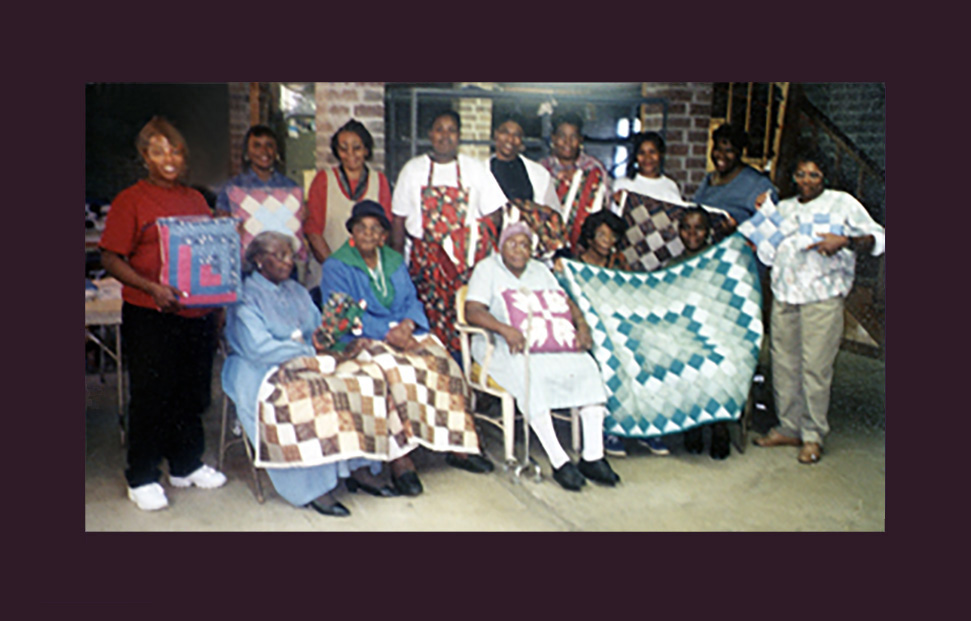
While the Freedom Quilting Bee cooperative was start and foremost the result of the women who created the beautiful quilts and worked to build and run the organization, information technology may not have happened without a number of people and groups who contributed time, social connections, services, materials, and other resources to the project. The Selma Inter-Religious Project (SIP) and the Selma Christian Leadership Conference (SCLC) were central to the local civil-rights organizing at the time and much of the initial resources for buying the quilts came from their extended networks. One of the people who helped the FQB to grow was Father Walter, a white Episcopalian Government minister who was denied work, loans and even the right to adopt children in Alabama for years because of the interference of a Bishop who took effect with his anti-racist interpretation of the gospel. It was Male parent Walter, who, while working for the civil rights movement, arranged to take the quilts auctioned at a hip photography studio in New York City and helped plant the initial connections with the art scene there, eventually leading to the promotion of the quilters and their piece of work by abstruse expressionist painter Lee Krasner, art historian and curator of the New York Metropolitan Museum of Art Henry Geldzahler, interior designer Sister Parish, and long-time Vogue editor Diana Vreeland.

"Quilter's Fancy" past Estelle Witherspoon northward/d. Photograph: Stephen Pitkin/Pitkin Studio
Every bit the story goes, Begetter Walter was driving around Possum Bend with another civil-right activist working in Wilcox Canton when he saw iii cute quilts hanging out on a line. Perchance because of the influence of his wife who was a graduate student in art, or perhaps owing to his time in Seminary school in NYC, he recognized that there was something most these quilts - the loftier-dissimilarity graphic designs, the flare of colour and style - that reminded him of the art world across rural Alabama. He and his friend got out of the car, hoping to speak to the artist who had fabricated them but information technology seemed no one was dwelling. Returning later on with a local black woman, Ms. Saulsbury, who knew the quilter, Ora McDaniels, he realized that when she had seen two white men coming to her house, she had run into the woods to hide. The second run into was smoothed by the presence of a common associate and he bought a few quilts from her and a number of other women in Possum Bend. He bought them outright for $x each and the sale of a ten-dollar quilt meant for well-nigh a 1% gain in annual income. He explained that he was going to have them sold at an auction in New York and would bring back whatsoever profits were fabricated on top of the $10. As SLSC representative Reverend Dan Harrell recounted in Nancy Callahan's volume The Freedom Quilting Bee:
The people were in a win-win state of affairs. X dollars was twice as much as they'd always got for a quilt earlier. So if this crazy white man ever showed upwardly again, information technology didn't really matter. But my goodness if he actually was going to practice what he said, rather unheard of for white people, that would be even amend. What was there to lose?1
When Begetter Walter returned with profits from the auction, as promised, information technology turned out they had everything to proceeds. As more and more women offered upward quilts, some made to order, some pulled out of storage chests and directly off of beds, it became obvious to the community that this was a cooperative ready to blossom. They obtained costless services from a lawyer, and on March 26, 1966, within one year of Martin Luther King Jr's famous march across the Black Belt, 60 quilters came together to adopt a lease, elect officers and plant this arrangement that would change Wilcox county and the lives of so many of the people who lived there.
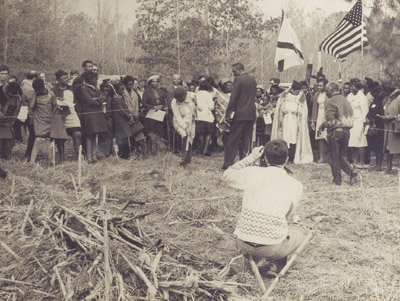
Groundbreaking at FQB site in March 1969
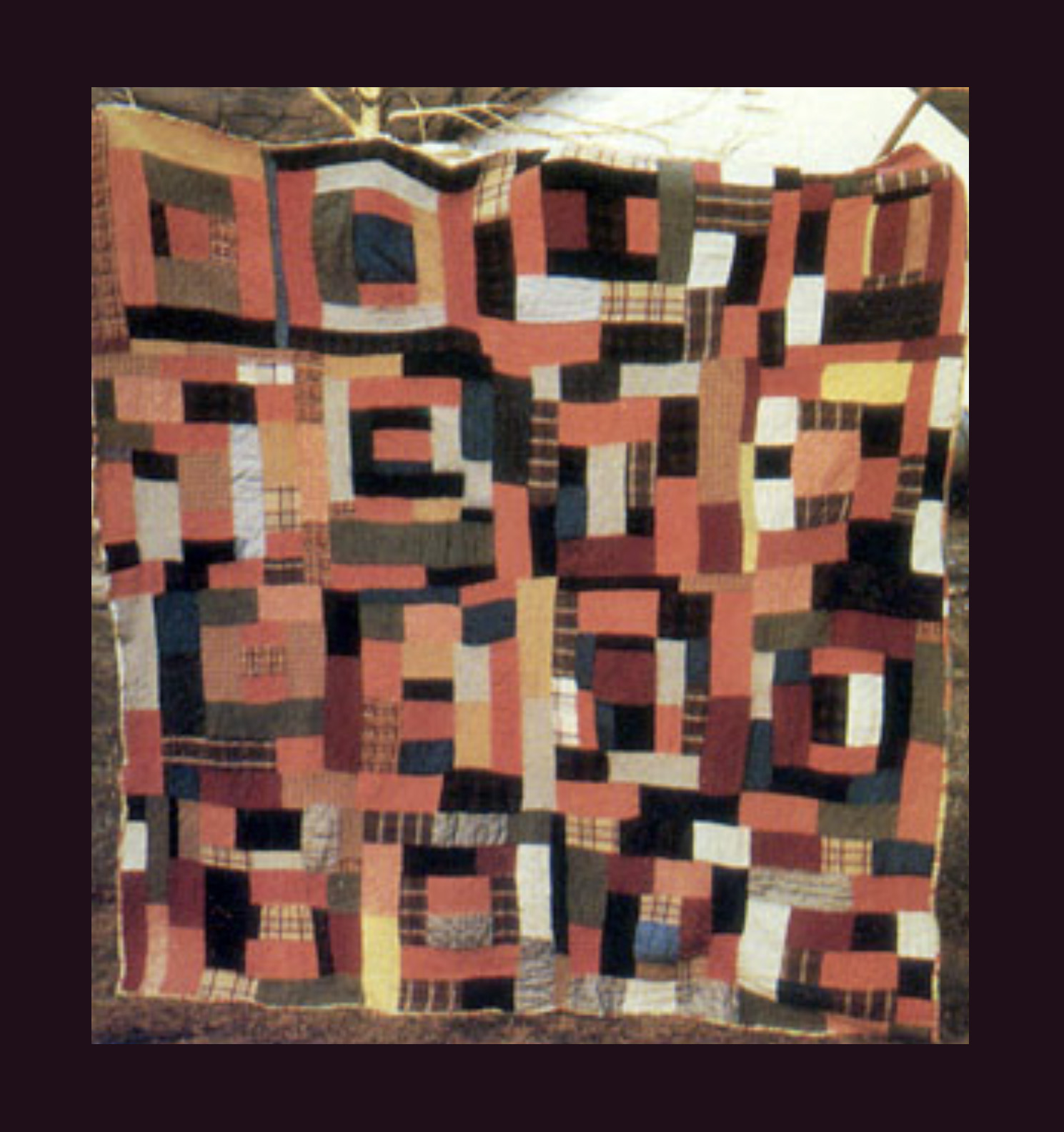 All-wool crazy quilt made for the Freedom Quilting Bee past Minsie Lee Pettway. Photo past Nancy Callahan
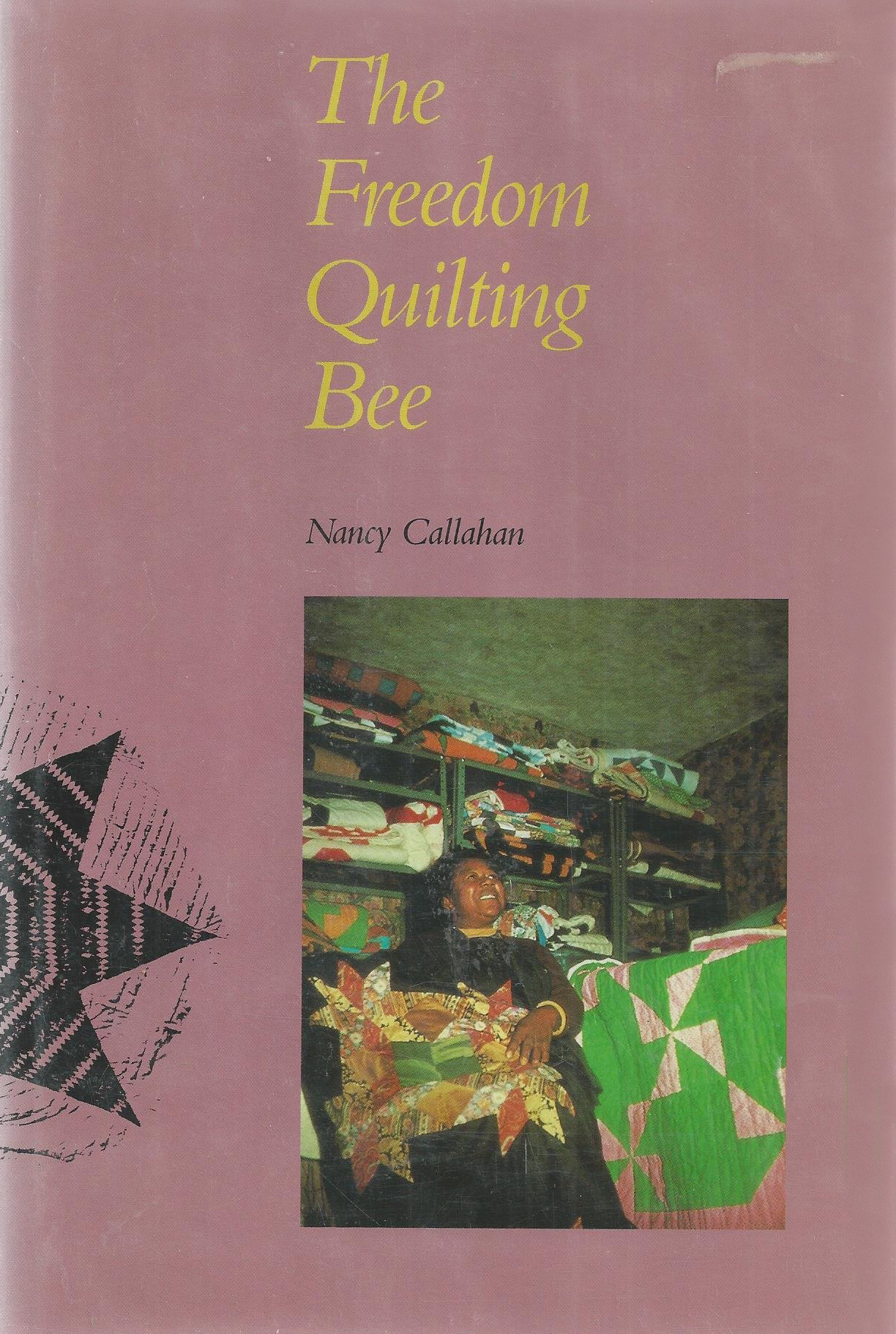
The Freedom Quilting Bee: Folk Art and the Civil Rights Motility past Nancy Callahan
What began as an informal grouping of quilters with unlikely connections to well-positioned people led to a robust workers-cooperative which enabled the women to buy land, build a big sewing studio with a congenital-in daycare centre, and sell small parcels of the land to provide housing to members of their community who had been displaced in the fight for voting rights. The Civil Rights movement brought an unexpected influx of resources and media attending to a poor rural African American community. Understanding that this moment might never come up once again, the women of this customs, aided by those people who were determined to offering what support they could, tenaciously seized their opportunity and established a means for their community to mutually flourish.
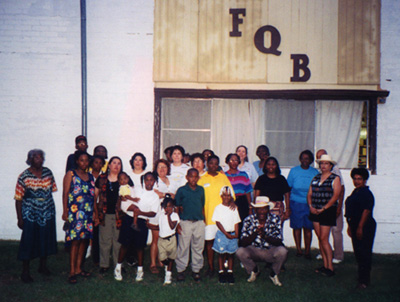
Freedom Quilting Bee site with members and RDLN visitors
Source: https://feralfabric.com/Vol-1-Aja-Bond
Belum ada Komentar untuk "The Freedom Quilting Bee Folk Art and the Civil Rights Movement"
Posting Komentar