This 13thcentury Love Poem Is an Allegorical Account of the Art of Courtly Love

Meet a Trouble?
Thanks for telling us about the problem.
Friend Reviews
Community Reviews


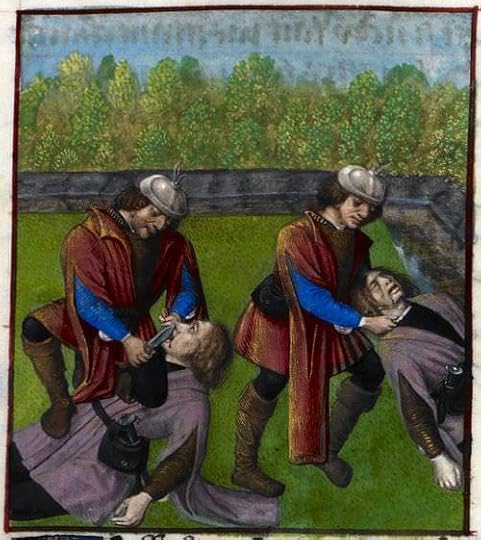
It'south a pretty wild ride. On its confront, it's an allegorical account of courtly dearest in which various concepts are personified into actors who aid or oppose the protagonist pursue his love, for example the Lover'southward greatest enemy, Rebuff, finds out from Evil Tongue that Fair Welcome helped the Lover kiss the Rose, so Rebuff has Jealousy lock Off-white Welco
This poem is so goddamn weird I accept no idea what to think of it. There are tons of manuscripts with interesting art and so here'southward a few to give an thought. It's a pretty wild ride. On its face, it's an allegorical business relationship of courtly love in which various concepts are personified into actors who aid or oppose the protagonist pursue his dear, for instance the Lover's greatest enemy, Brushoff, finds out from Evil Natural language that Off-white Welcome helped the Lover kiss the Rose, so Rebuff has Jealousy lock Off-white Welcome up in a fortress, and information technology's up to our hero's lord, Love, and conscripted allies such equally Friend, Boldness, Pity, Wealth, Constrained Abstinence, and Faux Seeming to help him storm the fortress so Fair Welcome tin reunite him with the Rose. Very quickly information technology gets bloated and ridiculous, and it'southward pretty funny when the action happens and these allegorical figures are physically fighting on the battlefield. However a big bulk of the poem consists of long monologues by figures such as Reason and Nature who are advising the Lover on how love should piece of work. Boethius is Jean De Meun'southward model for these monologues, and quite a bit of the poem is a regurgitation of ideas in The Consolation of Philosophy. However these nearly e'er overstay their welcome, run down endless digressions, tend to be more boring than entertaining, and we know them to exist farcical so information technology'due south equally equally hard to take them seriously. In that location are a few glimmers of fun in these, like Genuis' imperative to "put your minds to ploughing vigorously," Nature'southward account of an animal uprising, Reason'southward speech on why we should skip allusion and only call testicles testicles, and Friend's exhaustive account of a jealous cuck wifebeater. Only information technology'south closer to exhausting a lot of the fourth dimension, and Jean de Meun really had no thought how to incorporate his writing like the more than reserved Guillaume de Lorris. If I'm to recommend this information technology's considering for one it'south pretty of import for Medieval literature and historical perspectives of honey if you lot're into that, and secondly information technology's such a strange unique poem that information technology'south interesting even when it'southward boring.
...more
"This is a bespeak I would press on anyone dealing with the Center Ages, that the first es-sential is to read the relevant classics over and over: the cardinal to everything-- allegory, courtly love, etc. – is there. After that the two things to know really well are the Divine Comedy and the Romance of the Rose. The student who has really digested these with expert commentaries, and who also knows the Cl
This was a book C. S. Lewis taught in his medieval classes (he discusses it in The Allegory of Love):"This is a betoken I would printing on anyone dealing with the Middle Ages, that the first es-sential is to read the relevant classics over and over: the fundamental to everything-- allegory, courtly beloved, etc. – is there. After that the two things to know really well are the Divine One-act and the Romance of the Rose. The educatee who has really digested these with good commentaries, and who likewise knows the Classics and the Bible (including the apocryphal New Testament) has the game in his hands and can defeat over and over over again those who take simply burrowed in obscure parts of the actual Centre Ages." – C. S. Lewis (Letters of C. S. Lewis, pg. 156)
"Two kinds of symbol must surely be distinguished. The algebraic symbol comes naked into the earth of mathematics and is clothed with value past its masters. A poetic sym-bol—like the Rose, for Love, in Guillaume de Lorris—comes trailing clouds of celebrity from the real world, clouds whose shape and colour largely determine and explicate its poetic utilize. In an equation, x and y will do likewise as a and b; but the Romance of the Rose could not, without loss, be re-written as the Romance of the Onion, and if a man did not see why, we could only transport him dorsum to the real world to study roses, onions, and dear, all of them still untouched by verse, still raw." --C. S. Lewis
Update (6/14/17): We fabricated it well-nigh 3/four through the book and decided we had plenty. We probably could have stopped with the first half of the book, i.east. the office by the original writer. I love allegory and found useful material in here that led to discussions about dating, simply in the end felt nosotros needed to move on to other books on our reading list for homeschooling.
...more
Despite all this, The Romance of the Rose has its merits. In one case I stopped expecting the many allegories to grade a cohesive story and treated them instead as a puzzle of metaphors, I institute it much more satisfying. Who can't chronicle to the idea of Jealousy building a massive castle to obstruct the potential lover? Non only is this work important in understanding the literature and mindset of its time, it sparked my interest with the maze of pregnant hidden inside its allegories. I also plant the ending (or lack thereof) of the portion by Guillaume de Lorris to exist intriguing. Ignoring the massively long (and much more bawdy) extension of this poem by Jean de Meun, it left me with the openness and puzzle of imagining how the tale might end.
...more
This translation, by Charles Dahlberg, is very readable, though it is a prose translation. Evidently this isn't a modern novel, but I found it quite fun to read -- this transl
The Romance of the Rose is worth reading mainly if you accept an involvement in medieval texts and particularly in those that express 'courtly beloved' (or fin'amours, whichever you call back more than accurate). It's one massive allegorical dream sequence, the work of 2 writers, and it was massively influential on later medieval writers.This translation, by Charles Dahlberg, is very readable, though it is a prose translation. Manifestly this isn't a modern novel, just I establish information technology quite fun to read -- this translation, at least, captures a kind of energy and playfulness to it. At the same time, I can't say I was riveted, or that I'd read it if I wasn't so heavily involved in other courtly dear texts.
...more
I've read City of Ladies quite a few times because I am a big huge giant nerd. I've often wondered about Romance of the Rose considering of Pizan's hatred and too because it was such a popular work in the thirteenth and fourteenth centuries. Imagine my delight when I plant information technology at the Large Used Bookstore in Tourist Trap, NC. I immediately handed over my debit carte and brought it habitation where information technology rested on the Alluvial Evidently of Mt. ToBeRead to mellow for a while until its time came to leave that hallowed peak. I was not disappointed in either the quality or the misogyny.
Well, I was disappointed by the misogyny but I am a Educatee of History and I know that's how things were back and then. Nosotros can't change the past only we can learn from information technology.
There are two authors of Romance of the Rose. Guilliaume de Lorris started it, telling the story of a man who found the Garden of Pleasure, went inside, and discovered a political party of allegories: Pleasure, Idleness, Courtesy, Pleasant Looks, Fair Welcome and the God of Honey himself. He likewise plant a beautiful rosebud which he immediately falls in love with. Off-white Welcome tries to help him win the rose, merely Jealousy, Evil Tongue, and Shame intervene and lock the rose and Fair Welcome away in a castle. Then Guilliaume de Lorris dies.
Jean de Meun comes along thirty years after and finishes the story, making sure to show off his rhetorical instruction at every turn. He takes the allegory and runs with it, introducing Nature, Genius, and Reason which all brand loooooooooong speeches that cover everything from the art of seduction to the differences amongst the dissimilar monastic orders to how to properly drink wine. This is where the misogyny comes in. Many of the speeches denounce women as deceitful, lustful, and treacherous. "The Advice of Friend" is the biggest offender in this regard. That chapter includes instructions on how spouses should beat the everlasting out of each other. O tempora, o mores!
Despite all that the volume is actually quite interesting and readable. That might be due to the translation I have. Part of being a big huge giant literature nerd is developing standards for which imprints volition grace your shelves. Me, I go straight for the Penguin Classics or Oxford World Classics beginning considering they have the all-time terminate notes and most readable translations. Barnes & Noble Classics are likewise good considering they translate all the random strange languages, especially French which I do not speak or read. Signets are correct out! Only all that aside, the Oxford World Classics edition of Romance of the Rose is a great book and if you find information technology y'all should get it. Please enjoy the extended sexual activity metaphor in the final pages.
And if de Meun's chauvinism gets to be too much for you lot, I recommend following it up by reading the Penguin Classics edition of Urban center of Ladies.
Cross-posted from The Eclectic Reviewer
...more
On of Gilbert Highet's 3 must read works of the Middle Ages forth with Chaucer and Dante. Was surprised how much I enjoyed information technology, specially in Gs latter stages - the piece of work definitely picks upwards when Guillaume de Lloris is replaced equally author by Jean de Meun (almost 1/5th of the war through)


Commencement, if you like Boethius or just like philosophical debates, this is the volume for you. We have Reason as a female character (Lady Philosophy, anyone?). We take dia
I love the Romance of the Rose for many dissimilar reasons. Admittedly, I am a medievalist and simply about anything from that era literature-wise floats my boat, but Rose has a lot to offer just about anyone I recall. With that said, I will start with what me, every bit a medievalist, liked and what, besides me, equally a human beingness institute hilarious.Showtime, if you like Boethius or just like philosophical debates, this is the book for you lot. Nosotros accept Reason every bit a female graphic symbol (Lady Philosophy, anyone?). We have dialogues debating the accuracy of freewill versus predestination. Nosotros take diatribes against Fortune and her fickle cycle (or will, pun intended). We take, in short, plenty to appeal to the better read medieval audience who might have read this verse form.
Then, for the Chaucerians in the crowd, we have true, unmitigated source cloth for the Wife of Bathroom. At that place is a pitch perfect instance of the archetypal nagging married man that the Wife of Bath despises. Through him, we get a rehash of all the religious and philosophical misogynistic tradition that the Married woman so hates. Added to this, nosotros take an Onetime Woman who eerily resembles the Wife. She, like her, has had her fun and wishes longingly that she could continue to do so. Lovely, lovely parallels here.
If medieval lit is not your purse, however, in that location is still enough to love well-nigh the Rose. For 1, the level of metaphor and punning in this poem is unreal. Medieval euphemisms for sex were, and keep to be, funny. On the other hand, we have a narrator / main character, the Lover, who is incredibly, and hilariously stupid in so many means. Friend tells him to avoid Wealth. What does he do? He goes to Wealth, who soundly rips him a new one. And then, on a more serious note, we have the ultra creepy scenes with the God of Love. I mean this guy hunts our narrator with bow and arrow. Absolutely, information technology is all metaphorical, but that does niggling to mitigate the pitter-patter factor. Interesting stuff.
In brusque, there is a lot to love in the ancient text.
v stars
...more

Honestly, it's a skilful affair to read for a student of medieval literature, particularly one with an interest in the tradition of courtly honey. Definitely do NOT skip the introduction and preface, because the roman gets dumbo and hard to follow at times. It's also reassuring to read the othe
My rating is for the translation and forepart matter, not the content. Last fifty pages are a thinly veiled porno. Literally just read this so that I can encounter Christine de Pizan rip it to shreds. So up yours, Jean.Honestly, it'south a expert matter to read for a student of medieval literature, particularly one with an interest in the tradition of courtly love. Definitely do Not skip the introduction and preface, because the roman gets dense and difficult to follow at times. It'due south also reassuring to read the other reviews and find that I'm not lone in finding this text difficult.
...more
Only I think this work is really rewarding if you lot accept the time to read closely, and set up sharply, noting where information technology digresses, where it answers itself through the different characters, and why. One could probably spend a lifetime...


That said, the poems are very long. The allegories go a niggling tired after a while, and at times it but seems like information technology would be simpler and more effective to driblet the poetic grade and extoll the virtues of philosophy through simple prose. Especially Jean de Meun appears to be quite unromantic, ironically chastising women in straight conflict with the earlier poem past Guillaume de Lorris, and abandoning emotion and feeling for a sort of cold reason.
That said, this volume was quite influential in its time. It has its claim and flaws, only students of western history would benefit past reading it.
Meet my other reviews here!
...more
And see it through I did, only wading through thick emblematic mead and medieval polemics on everything from medieval mores to predestination (this role was interesting), medieval astronomy (weird however
I don't know what possessed me to pick upwards this 13th century allegorical treaty on 'ladylike love' rather than a misplaced sense of searching for subconscious gems and then, when I discovered that if there were any, they would be very few and far between, a dogged determination that I must see it through.And see it through I did, but wading through thick emblematic mead and medieval polemics on everything from medieval mores to predestination (this part was interesting), medieval astronomy (weird notwithstanding fascinating), mirros, religious behaviour (then many types of friars) and finally: dearest and relationships.
It's very true this part could take been distilled in a few pages simply the very modernity of some of the advice makes reading Men are from Mars, or why Dear Men loves bitches obsolete.
If you can put upwards with 300 pages of medieval allegory information technology is worh it!
Stay tuned, GREAT quotes to follow!
...more

I enjoyed the way information technology was written, just for the love of me I cant remember a single name from this piece nor do I really understand what happens in the end? Does he just wakes upwards? That'south it? It's very unclear, but... It wasn't every bit wearisome as I thought it was going to be and the ending left me wondering what had actually happened so... Yep, that'southward all I have to say.

Jean de Meun's department: occasionally interesting, by and large massively tedious. Guillaume de Lorris' department: pleasant plenty.
Jean de Meun'southward department: occasionally interesting, generally massively boring. ...more

The vast majority of the book is taken up by extremely long-winded, wearisome, repetitive, and largely irrelevant monologue
While I'm sure this volume has considerable value in shedding calorie-free on some aspects of medieval thinking, I didn't detect it enjoyable to read at all, especially afterward Jean de Meun took over, less than one fifth of the way in. Any scholarly involvement the text might have, I think the writing merely isn't that good, and the volume suffers from major flaws in coherency and focus.The vast majority of the volume is taken upwardly past extremely long-winded, dull, repetitive, and largely irrelevant monologues past the primary characters. It actually reads like Jean de Meun was principally in love with hearing himself speak, and though his original purpose was to consummate the vision started by Guillaume de Lorris, he let himself be distracted from that purpose by the temptation to lecture the reader on every topic he happened to know anything about.
It seems that equally he wrote, he never practical any critical idea to any digression that popped into his head, and instead eagerly kept his quill to the parchment, even if it meant interrupting his graphic symbol in the eye of a idea, sometimes going on for dozens of pages, totally disrupting the flow of the story. Not only that, but he ofttimes felt it necessary to repeat the same idea two, or fifty-fifty three or iv different ways, ofttimes taking whole paragraphs or pages to convey ideas that could have been expressed in a unmarried sentence, and going back to repeat ideas he had already gone over in previous paragraphs.
Equally I said, it was extremely wearisome, and I can't see that whatever of it ended up being worth the effort, since most of the ideas in these lengthy monologues are simply borrowed from writings by other authors. It would be far more than gratifying to go to those original sources, if you were interested in those ideas, than to toil through the sloppy hodgepodge that Jean de Meun cooks up from them. The original part of this romance, the apologue of the lover and the rose, which probably makes upward less than i fourth of the content, is really not clever or interesting enough, when combined with 3 other portions of absolute tedium, to redeem the work as a whole.
I take read and enjoyed a lot of medieval literature, but The Romance of the Rose, despite the dorsum encompass's claim that it "became the nearly popular and influential of all medieval romances" did not print me. I didn't find information technology entertaining or enlightening in any way.
...more
I grew weary. I have toiled and laboured in the sentences that have run onto paragraphs and paragraphs into pages. For xx pages I can be removed from what started the conversation only to exist brought dorsum as the narrator tells me "a sermon is best delivered concise". Going on tangents is what I told my friend when I identified the illness of this volume. The volume contains 300 then pages but it lacks the characteristics of a page turner to exist cycled through quickly.
The best parts are crawly.. the okay parts are a lilliputian below okay. 3/5 - Jackson (Aug, 31)
"Flatterers may come and detain them with their insincere talk, dinning their ears with their efforts to curry favour, sighing and abasing themselves, joining their easily to beg for mercy, bowing, kneeling, drenching themselves with their tears, crossing themselves in order to gain their confidence, treacherously pledging hearts and bodies, property and service, promising and swearing by the saints who are, accept been, and will be, and deceiving them with words that are only so much hot air, only equally the fowler hidden in the woods like a thief sets his snare for the bird and calls information technology with sweetness songs to come to his trap so that he may take hold of it." [on flatterers trying to connive old woman]
...more
And then Jean de Meun got agree of it.
Jean de Meun, to employ modernistic parlance, was a The starting time part of the Roman, the original section written by Guillaume de Lorris (R1), isn't bad... a scrap risque for my taste, but the allegory is clear enough, and the imagery is nicely fanciful and suits the pleasant little story of a love affair gone wrong. There'due south certainly room to debate that Guillaume intended to continue R1 at some point or write a sequel only never got around to it, but R1 stands lone well enough.
And so Jean de Meun got hold of it.
Jean de Meun, to utilize modernistic parlance, was a fanboy whose OTP was Abelard/Heloise. And his continuation (R2) is fanfic of the most cringeworthy sort. He doesn't fifty-fifty effort to keep the bulletin or the label consistent with R1, and he also tries--and fails--to write in somewhat the same style as Boethius. The result is a rambling raunchfest that I gave upward on and wouldn't even have attempted to read had it not been required for a class.
I find it somewhat baffling that many later medieval readers, including my friend the Pearl poet, looked on the combined version of the Roman (R3) equally an allegory with seriously edifying spiritual significant. Evidently there was no little controversy over such a reading even in the Middle Ages. But I suppose in that location's no bookkeeping for taste or bias, particularly beyond such a bridge of time. ...more


And, in the twelvemonth 2010, this is racist, sexist and homophobic and it was painful to read. It made me not happy to take come up from the European tradition, genetically and culturally. I experience such empathy for people who read this who are of color and
I fully acknowledge, first of all, that I am judging this novel by a modern perspective. But, here I am, the reader, and I bring to this what I have lived and therefore do I really have to justify judging it by a modernistic-24-hour interval perspective? I live in the twelvemonth 2010!And, in the yr 2010, this is racist, sexist and homophobic and it was painful to read. It made me non happy to have come from the European tradition, genetically and culturally. I feel such empathy for people who read this who are of color and have to read how "the perfect lover" is a white European male person with blond pilus, considering I am a lesbian woman who had to read that "the perfect lover" had to be a human, but could not dearest other men, which would be "against nature." Awful.
...more than
on love and its consummation
Turns into the impuissant but lovely rant of a nihilist teenager who basically tells information technology like information technology is
To finally leap into 'homophobic hell'
and climax while gloriously devouring Chastity
ecstatic, full-on rape; and and then he woke up
A morally corrupt nightmare, but fascinating as hell.
Starts out as a beautifully stupid allegoryon dearest and its consummation
Turns into the impuissant but lovely rant of a nihilist teenager who basically tells it like it is
To finally spring into 'homophobic hell'
and climax while gloriously devouring Chastity
ecstatic, total-on rape; and then he woke up
A morally corrupt nightmare, just fascinating every bit hell.
...more
As a text? Not much to say about information technology. It's an emblematic dream vision of ballsy proportions, with a cast of characters personifying various emotions and ideal/bad human qualities, with a smattering of Roman gods/mythology to boot. Information technology charts an allegorised business relationship
The Romance of the Rose is an incredibly important text for anybody studying mediaeval literature, which influenced the writings of many afterwards authors, with the nigh notable probably being Chaucer (he fifty-fifty did a partial translation of it).As a text? Not much to say about it. Information technology's an allegorical dream vision of ballsy proportions, with a bandage of characters personifying various emotions and platonic/bad homo qualities, with a smattering of Roman gods/mythology to boot. It charts an allegorised account of a courtly love thing (an odd one in that the protagonist wins in the end) in which the protagonist must do boxing with the antagonists Jealousy, Evil Tongue, Shame, Chastity, Fright, and Rebuke, with aid in his battle coming from Cupid, Venus, Fair Welcome etc. in lodge to pluck the budding rose, which is the object of his desires. And so yeah, every bit allegories get it is hardly a subtle one, so why is it an of import text?
Well, in amongst this incredibly simplistic plot there are lengthy tangents which wax philosophical, drawing on (frequently out of context) a huge range of classical and gimmicky sources in order to outline what is deemed a guide to the fine art of love. These sections can become incredibly dull and oft mysogynistic (the author never ascribes some of the more than unsettling statements to himself though, usually ascribing them to others), however these tangents essentially tell the reader everything that needs to be known nigh the method of ladylike beloved, and this in particular is important, equally this poem goes on to influence texts ranging from Chaucer's 'Troilus and Criseyde', to Malory's 'Le Morte d'Arthur' (albeit in a much more than interesting, less beat you over the head with information technology kind of manner).
Aside from its influence there is not a lot to be said most information technology. Its allegories are frequently thinly veiled sexual allusion, and one of the things that struck me virtually about it was that information technology seems to be the original source of a lot of sexist and/or rape apologist comments that are in use today, which is in itself interesting in a morbid kind of fashion. As for the prose translation past Oxford, being prose information technology probably sticks to the original text every bit far equally possible, which is useful in an academic sense, but as well makes it as dull as dishwater to read. I requite the volume three stars because if you are looking at mediaeval texts which came later then information technology is very useful and aids understanding, but without that motivation it is kind of hard to get through, and I'd merely recommend it to those who take an academic interest. Information technology made me express joy a couple times due to the sheer scope of its thinly veiled sexual metaphor, but bated from that it'southward really quite boring. No doubt it is a lot amend if you are able to read the original in middle French, and then if anyone has read the original, experience free to tell me what I'g missing out on (I'yard genuinely interested).
...more
I'll admit I find the start part past Guillaume de Lorris more than enjoyable. At that place a man recounts a dream from age 20 of coming upon a walled garden and the diverse figures both outside and within, including a fateful hedge of roses. The intellectual Jean de Meun in his continuation of the dream has a trend to drone on in making whatever is his point (once more his add-on is over four times as long). At times i wonders if he fully understood the dream text he (equally others also) decided was unfinished since figures go confused or points interfere with the narrative progression. Irony would also seem to be very important in the piece of work. I'm familiar with French writers that end upwardly exposing faults of the subject, rather than furthering rather middle-rolling ideas. However, I have a little difficulty deciding which conclusion Jean de Meun is intending. The writer at one betoken himself attests he is non being disrespectful for whatever that is worth .I actually found the disclaiming passage where he wishes to excuse himself and prevent abuse of the verse form quite humorous! At the very least I experience his extra speeches indeed price me more a little in way of time.
Reading the writing today near feels a petty unfair since modern audiences have different civilisation and so some aspects may not be easily understood or in a like manner. Still, information technology raised debate in the Heart Ages too. Though in that location is a proficient amount of philosophical ideas and psychology around love as well every bit symbolism in the Romance of the Rose that indeed are familiar.
This edition translated by Charles Dalhberg is my preferred option in English for its modern writing. Information technology includes pages and pages of very academic introductions on the Romance of the Rose equally well.
...more
The wo
As its existence and history as a highly popular early medieval text, I enjoyed knowing I've read this looooong poem and taking a deeper wait at how it reflects medieval attitudes and ideas on love and romance. The allegorical attribute was well done, if a little heavy handed from the view of a modernistic reader. I liked looking backwards from this text and seeing the influences from Ovid and Greek works, every bit well as looking forwards and seeing how writers similar Chaucer took inspiration from this.The worst part of this book (again, from a mod standpoint) was the fact that characters had monologues that went on for AGES. We're talking l+ pages hither. It was incredibly tedious to get through at times! But I also understand that these detailed monologues were a new matter in developing medieval Western romance and would have been a novelty to hear read, and then I don't completely dislike information technology. I'k just saying it'southward a read that you've gotta commit to or you're just gonna become lost in the pages and pages and PAGES of speeches.
Like I said, I'g glad I read it! I don't call back I'll ever reread the entire poem cover to cover again, merely I am going to take a few more than zoomed-in looks at the more interesting passages. :)
...more

From Wikipedia
News & Interviews

Welcome dorsum. Just a moment while we sign you in to your Goodreads account.

Source: https://www.goodreads.com/book/show/332226.The_Romance_of_the_Rose
Belum ada Komentar untuk "This 13thcentury Love Poem Is an Allegorical Account of the Art of Courtly Love"
Posting Komentar